Eid in Pune: How Maharashtra's International Student Community Makes Every Culture Feel at Home

Hessa did not expect to cry on Eid morning. Not from homesickness, from the opposite. She woke up in her Pune hostel to a corridor full of students from Nigeria, Bangladesh, Kashmir, and Kerala knocking on her door with sweets. Someone had strung lights along the hostel balcony the night before. By 9 AM she was in a group of thirty students heading to the neighbourhood mosque, half of them wearing their best clothes and none of them from Bahrain. She called her mother and said it felt like Eid. Her mother, who had worried about this exact day for months, exhaled properly for the first time since the flight.
Eid on Maharashtra Campuses: What Actually Happens
Maharashtra's major university cities, Pune and Mumbai especially, have Muslim populations that predate modern India. Eid ul-Fitr and Eid ul-Adha are public holidays across Maharashtra. Campuses do not run business as usual. Examinations are not scheduled on Eid days at institutions with significant Muslim student populations, and the university calendar at most colleges formally acknowledges both Eids alongside Diwali, Christmas, and other religious observances.
What happens on campus varies by institution but the pattern is consistent at colleges with international student communities. Student associations organise shared Eid breakfasts or lunches in the hostel common rooms. Canteen staff at Muslim-majority catering sections prepare biryani and festive food. Students who have been in Pune for a few years know which restaurants in the nearby areas run Eid specials and share the information in group chats days in advance.
The campus atmosphere on Eid morning has a particular quality that students who experienced it consistently describe the same way: it felt more like home than they expected it to. That is not marketing language. It is what happens when you are surrounded by people for whom Eid is also a real and significant day, even if their version of it looks slightly different from yours.
The Muslim Student Community in Maharashtra
Maharashtra has an estimated thirteen million Muslim residents, making it one of the largest Muslim populations of any Indian state. Pune and Mumbai both have well-established Muslim neighbourhoods with mosques, halal food infrastructure, Islamic schools, and community organisations that have operated for generations.
International Muslim students arriving in Maharashtra are not arriving as a novelty. They are arriving into a city where the azaan sounds from multiple directions five times a day, where halal meat is available within walking distance of most campuses, and where the social norms around Ramadan, including adjusted meal timings, quieter evening common areas during Tarawih, and Suhoor availability at some hostels, are understood and accommodated rather than explained.
The Muslim student community within Maharashtra universities is itself diverse. Students from Kashmir, Uttar Pradesh, Kerala, and Maharashtra's own Konkan coast study alongside international students from Gulf countries, West Africa, East Africa, Bangladesh, and Southeast Asia. The community is not monolithic in practice or culture, and that diversity makes it more interesting to be part of, not less.
Prayer Arrangements and Religious Facilities
Pune has mosques distributed across the city, with concentrations in areas near major universities. Shivajinagar, Kothrud, Camp, and Hadapsar all have functioning mosques within short distances of the campuses that house the largest international student populations. Friday Jumu'ah is accessible without significant travel for students at most Pune institutions.
On-campus prayer arrangements depend on the institution. Some colleges have designated prayer rooms or musallas within the hostel block or the main building. Others provide a bookable common room for daily prayers. Students who arrive without confirmed prayer room information should ask the international student office before or immediately upon arrival, and should locate the nearest mosque using maps before their first Friday in the city.
The student WhatsApp networks that form within the first week of term at every Maharashtra university with international students carry this information organically. Prayer timings, mosque locations, halal food spots, and Ramadan iftar arrangements are shared between students who have been in Pune a year and those who arrived last week. The infrastructure for Muslim student life in Maharashtra exists because enough people use it to maintain it.
Cultural Exchange: Beyond Muslim Festivals
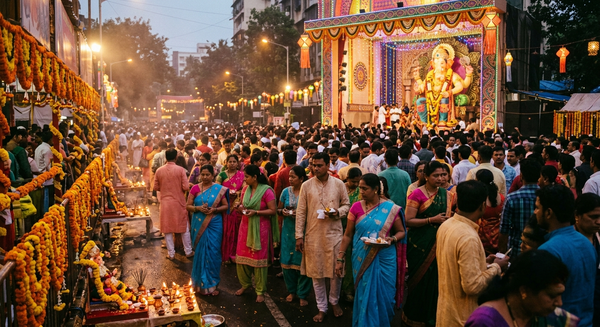
The campus calendar in Maharashtra runs all year with cultural events that are not exclusively tied to any one community. Diwali brings campus decorations, sweets distributed between hostel rooms, and in some colleges a collective fireworks moment. Ganesh Chaturthi, Maharashtra's biggest festival, sees the entire city transform for ten days with processions, music, and an atmosphere that students from any background find genuinely arresting the first time they witness it.
Holi is the festival that almost every international student mentions unprompted. The colour festival runs across campuses with a quality of collective joy that is hard to prepare for. Students who were initially uncertain about participating describe it as one of the most memorable days of their time in India.
The exchange runs both ways. Bahraini students who cook together in the hostel kitchen during Ramadan find Indian students curious and present. Arabic music in a hostel room draws neighbours through an open door. Gulf hospitality practices, the instinct to offer food, to welcome guests with generosity, translate across cultures faster than language does. The friendships that form in these spaces tend to be more durable than anyone expected when they first arrived.
Sports, Societies, and Student Organisations
Maharashtra universities run active student life programmes. Cricket is the default sport and the cultural currency of Indian campus life. International students who play, even casually, find an immediate social entry point. Colleges with strong engineering or management programmes often have inter-department tournaments that run through the academic year and pull students out of their course cohort into a wider campus community.
Student societies cover a range of interests. Debate clubs, photography societies, cultural committees, NSS volunteer programmes, and entrepreneurship cells all run at major Pune and Mumbai institutions. International students are eligible to join from the first semester and often find that membership gives them a peer network beyond their immediate course cohort faster than any orientation programme manages.
The cultural committee at most colleges organises an annual international cultural day or similar event where students from different countries present food, music, and tradition. Bahraini students who have participated describe it as a moment that shifts how their Indian classmates see them from international student to someone with a specific, interesting place in the world.
The Friendship Network: Who Bahraini Students Meet
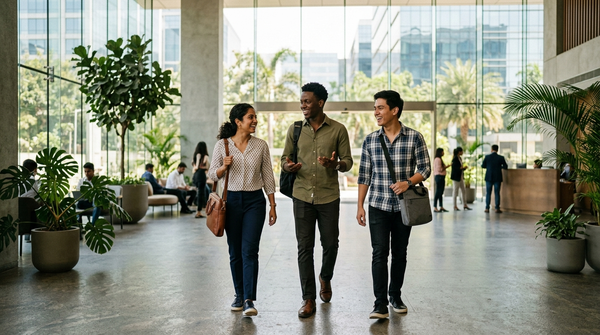
The social landscape of a Maharashtra university hostel is different from what most Bahraini students have experienced before. The immediate community on a hostel floor might include students from Maharashtra, Gujarat, Rajasthan, Karnataka, and Tamil Nadu alongside international students from Nepal, Bangladesh, Nigeria, Ethiopia, Kenya, Sri Lanka, and the Gulf.
Bahraini students consistently report that their closest friendships by the end of year one include Indian students they did not expect to connect with. The shared experience of being away from family, navigating a new city, managing academic pressure, and figuring out where to eat on a Sunday evening builds bonds faster than geography or background alone would suggest.
The Gulf student community within Maharashtra universities provides the comfort of shared reference. Someone who also prays five times a day, who also fasts in Ramadan, who also misses their mother's cooking in a specific way, is valuable to have nearby. But the wider network is what students describe as the lasting gift of studying in Maharashtra. The person who taught Hessa to find the best biryani in Camp was from Kerala. They are still in touch.
FAQ
Is there a Bahraini student association in Maharashtra?
There is no formal registered Bahraini student association operating across Maharashtra universities at this time. What exists in practice is more fluid and more functional: active WhatsApp and social media groups connecting Bahraini and Gulf students across Pune and Mumbai institutions, informal meetups organised around Eid, national days, and shared interests, and a network of students from earlier cohorts who make themselves available to incoming Bahraini students during orientation. Students from Bahrain who arrive in Maharashtra typically connect with this network within the first two weeks through mutual contacts, college orientation programmes, or the Gulf student communities that are present at most institutions with international student populations. If establishing a formal association is something you want to pursue, Maharashtra university student union offices can provide guidance on the registration process for recognised student bodies.
Hessa finished her first year. She is back in Bahrain for the summer and she has already told two of her cousins what Eid in Pune felt like. One of them is applying.
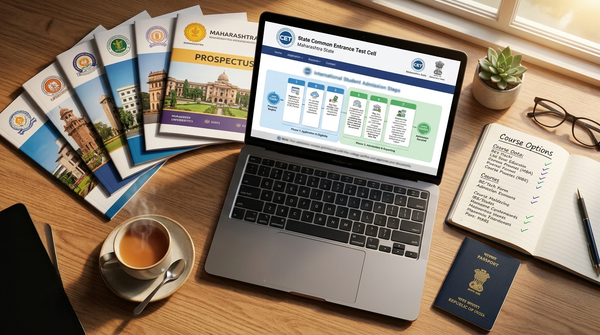
If you are thinking about it, the place to start is not a fair or an agent. It is the official portal, where the colleges, courses, and fees are all in one place, verified and government-backed.
Apply at fn.mahacet.org. No agents. No middlemen.
Maharashtra is India's most connected state for international students. Over 3,000 colleges. Every discipline. One government-backed portal. No agents. No middlemen.
Apply now at fn.mahacet.org, the official Government of Maharashtra portal.
Follow us: Instagram: @admissiondeskedu YouTube: Edulab Educational Exchange Facebook: @admissiondeskedu