I'm an Indonesian Student Studying Engineering in Maharashtra- Here's Exactly How I Got In (No MHT-CET or JEE Required)

Let me be honest with you about something.
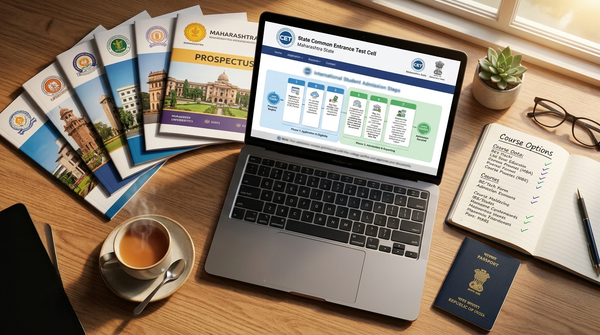
When I first decided I wanted to study Engineering in India- specifically in Maharashtra- I had absolutely no idea what I was walking into. I was sitting at my desk in Indonesia, laptop open, surrounded by sticky notes and half-filled forms, just staring at the ceiling thinking: How do people actually do this?
Nobody tells you what it genuinely feels like to navigate an entirely new country's education system from the outside. To decode a foreign government admission process completely on your own, with no one around who has done it before you. To sit with paperwork that isn't designed for you, in a language that's only half-familiar, and wonder if you've missed a deadline or filled out the wrong form or applied to the wrong category.
I spent months in that confusion. Maybe close to a whole year, if I'm counting the time I wasted going in circles.
So this blog post is for every Indonesian student sitting where I once sat- overwhelmed, curious, and not sure where to even begin. Because what I eventually discovered completely changed how I looked at the whole process. And once I understood the actual rules for Foreign National students, everything became so much simpler than I had imagined.
The Assumption That Was Slowing Me Down
Here is the single biggest misconception I had, and I hear it constantly from other Indonesian students asking me about this:
"Don't I have to crack the MHT-CET or JEE to get into an engineering college in Maharashtra?"
The answer is no. Absolutely not. And this one piece of information- had I known it earlier- would have saved me months of anxiety, unnecessary preparation, and wasted energy.
As a Foreign National, you are completely exempt from sitting the MHT-CET (Maharashtra's state-level Common Entrance Test) and the JEE (Joint Entrance Examination). These are the entrance exams that Indian domestic students are required to appear for in order to gain admission to engineering colleges in Maharashtra. The entire pressure-cooker ecosystem built around coaching classes, mock tests, and percentile scores- none of that applies to you.
The Maharashtra government has a separate, dedicated admission pathway specifically designed for international applicants, including Foreign Nationals, NRIs, OCIs (Overseas Citizens of India), and CIWGC (Children of Indian Workers in Gulf Countries) students. It is its own system. Its own portal. Its own process.
Once I understood this, everything else started to fall into place.
What You Actually Need: The Real Eligibility Criteria
So if there is no entrance exam, what does the admission process look for? The answer is refreshingly straightforward compared to what domestic students go through.
Your eligibility for engineering admission in Maharashtra as an Indonesian Foreign National is based primarily on your academic results- specifically your 10th and 12th grade equivalent qualifications.
Here is what you need:
Physics and Mathematics must be compulsory subjects in your 12th grade (or equivalent final secondary schooling). This is non-negotiable regardless of which engineering stream you intend to pursue. These two subjects form the academic foundation that Maharashtra's engineering institutions require of all applicants.
In addition to Physics and Mathematics, you need to have studied at least one of the following as a third science subject: Chemistry, Biology, or Computer Science. Most Indonesian students coming from an IPA (science) stream will already have this covered- typically Chemistry or Biology sits alongside Physics and Mathematics in the curriculum.
The minimum aggregate score required is 45% overall in your qualifying examination. This is the threshold you need to clear. It is deliberately set to be inclusive rather than restrictive, because the aim of the Foreign National quota is to attract genuinely motivated international students to Maharashtra's engineering institutions- not to filter them out through an impossible benchmark.
That is essentially it. No entrance exam score. No coaching institute percentile. No JEE rank. Just your school-leaving results, your subject combination, and a minimum aggregate. For a student who has worked hard through their Indonesian schooling, this is an entirely achievable bar.
Why Maharashtra? What Makes It Worth Coming For?
This is a question I get asked a lot by friends and family back home, and it deserves a proper answer.
Maharashtra is home to some of India's most respected engineering institutions. The state has a long, well-established culture of technical education, producing graduates who go on to work in India's booming technology sector, in global engineering firms, and in research and academia worldwide. Cities like Pune and Mumbai- both in Maharashtra- are genuine technology and innovation hubs, giving students access to industry exposure, internships, and networks that are genuinely hard to find elsewhere in South or Southeast Asia.
The sheer variety available is remarkable. Through the Foreign National admission portal alone, students can access more than 50 distinct engineering and technical courses across more than 200 colleges. Whether your interest is in Computer Engineering, Mechanical Engineering, Civil Engineering, Electronics and Telecommunication, Artificial Intelligence, or any number of specialisations that are shaping the future, Maharashtra's colleges offer it. With one application.
For an Indonesian student, there is also a meaningful cultural familiarity that makes the transition easier than you might expect. India and Indonesia share historical, cultural, and religious connections that go back centuries. The food, the people, the warmth- Maharashtra is not a cold or alienating place for someone coming from our part of the world. And the Indonesian student community in India, while not enormous, is growing and well-connected. You will not be alone.
The cost factor also deserves mention. Engineering education in Maharashtra, even at well-regarded private institutions, is significantly more affordable than equivalent programs in Australia, the UK, the United States, or even Singapore. For a middle-class Indonesian family investing in a child's future, the value proposition of a Maharashtra engineering degree is extremely strong.
The One Portal You Need to Know About
When I finally found this- after months of looking in all the wrong places- I felt equal parts relief and frustration that I hadn't discovered it sooner.
The official Maharashtra government portal for Foreign National, NRI, OCI, and CIWGC admissions is live at:
👉 fn.mahacet.org
This is not a third-party website. It is not a consultancy. It is not someone's blog with outdated information. It is the official, government-operated admission portal- built and maintained by Maharashtra's centralised admission authority (MAHACET) specifically for students like us.
Everything you need to apply to engineering programs in Maharashtra as a Foreign National runs through this single portal. It is a centralized system, which means you do not need to apply to each college separately. One application covers your access to the entire pool of participating institutions and courses. The portal walks you through document submission, course selection, college preferences, and the allotment process in a structured, step-by-step way.
When I used it, I was surprised by how much thought had gone into making it accessible to international students. Instructions are clear. The course listings are comprehensive. And because it is government-run, there is a formal, transparent process for allotments- no behind-the-scenes dealing, no agents taking commissions, no promises that cannot be kept.
Documents You Will Typically Need to Prepare
While the portal will guide you through the specifics for your application cycle, it helps to understand in general terms what documents you should be gathering. Based on the Foreign National admission process, you will typically need:
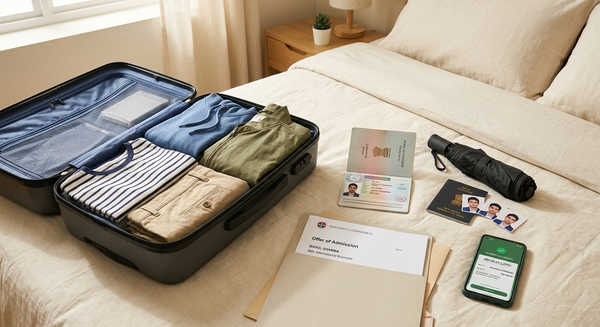
Your passport and valid visa documentation, academic transcripts and certificates for both 10th and 12th grade (or equivalent), official English translations of any documents not already in English, a certificate or attestation confirming your nationality as an Indonesian citizen, passport-sized photographs in the format specified, and in some cases, an equivalency certificate from a recognised authority confirming that your Indonesian qualifications are equivalent to Indian standards.
It is worth starting to gather these documents well in advance, because obtaining certified translations, apostilles, or equivalency certifications can take time. Do not leave this until the last month before an application deadline.
A Note on Timing
Admission cycles for engineering in Maharashtra typically open in the middle of the year, aligned with the academic calendar that begins in the monsoon season (roughly July–August). The Foreign National portal usually opens for registration and document submission in the months preceding this- often between March and June, depending on the year.
Because deadlines and specific dates shift from cycle to cycle, the most reliable thing you can do is bookmark fn.mahacet.org and check it regularly. The portal is the primary and most accurate source for current-year timelines, fee structures, and allotment schedules. Do not rely on WhatsApp forwards or YouTube videos from previous years for date-specific information.
Stop Overthinking It. Start Here.
I spent a long time making this harder than it needed to be. I looked for complexity in a system that, for Foreign National students, is actually quite clear. I worried about entrance exams because I was never required to sit. I prepared for a process that was never meant for me.
What I wish someone had told me- right at the beginning- is this: Maharashtra has already built a door for you. All you have to do is walk through it.
If you have completed your equivalent of 12th grade with Physics and Mathematics, studied Chemistry, Biology, or Computer Science alongside them, and scored at least 45% overall, you are eligible. The exam anxiety, the coaching pressure, the years of frantic preparation that Indian students pour into MHT-CET and JEE- none of that is your burden to carry.
Your path is different. It is simpler than you think. And it starts at one official address.
Ready to Begin?
Do not spend another semester overthinking this, waiting for the perfect moment, or hoping someone else will figure out the process for you. The portal is live. The seats are available. Maharashtra's top engineering universities are waiting for students exactly like you.
Start your application now at the official Maharashtra Foreign National admission portal:
🌐 fn.mahacet.org
50+ courses. 200+ colleges. One application. No entrance exam.
Your engineering future in Maharashtra begins right here.
This guide is based on the Foreign National engineering admission process for Maharashtra, India, as outlined by the official MAHACET portal. For the most current deadlines, fee details, and application procedures, always refer directly to fn.mahacet.org.
Contact & Follow Us
Start here: Visit our official Portal: https://fn.mahacet.org/
Contact us today to explore courses, universities, and various opportunities tailored just for you.
Instagram: admissiondeskedu
Facebook: Admission Desk
Twitter: study_in_maha
LinkedIn: study-in-maharashtra
YouTube: Edulab Educational Exchange Pvt Ltd
TikTok: @admissiondeskedu
Medium: @study_in_maharashtra
Study in Maharashtra, IndiaLearn Globally. Grow Professionally. Succeed Anywhere. 🌏
Start your engineering journey in Maharashtra today.
Apply Now at: https://fn.mahacet.org/