5 Myths About Studying in Maharashtra That Are Completely Wrong
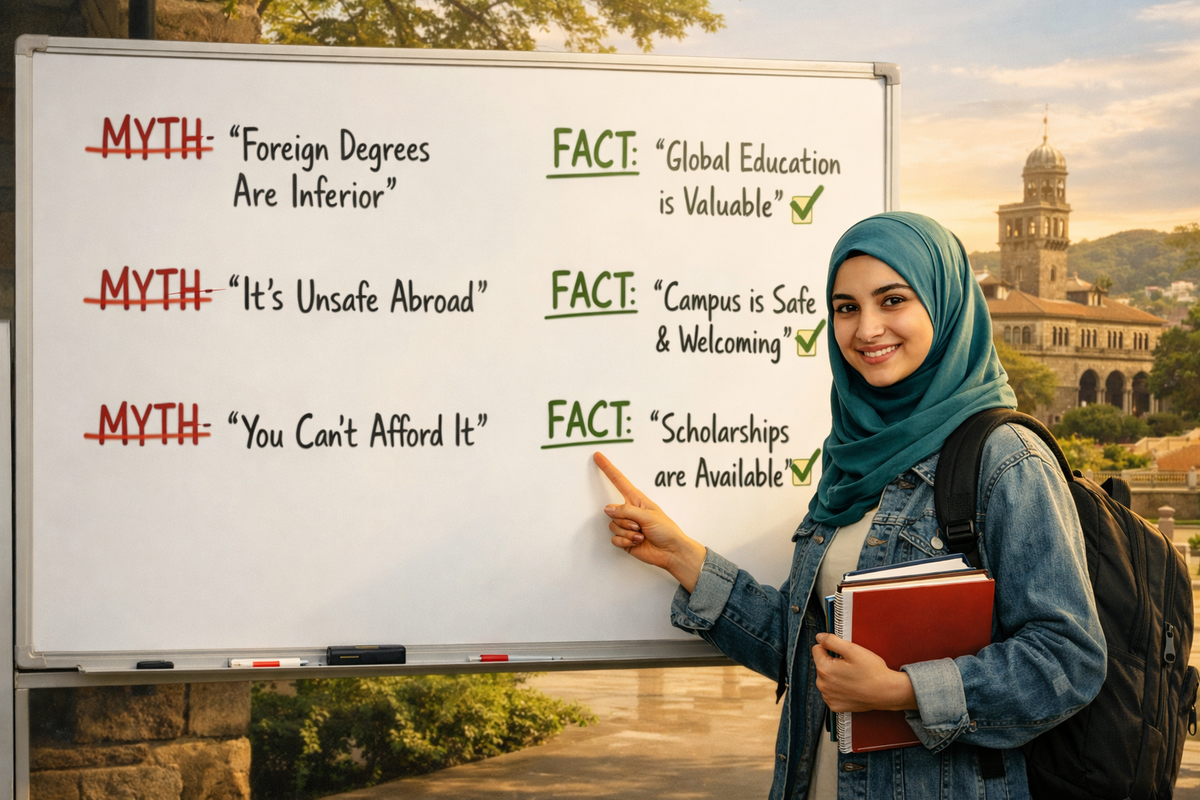
Hessa has heard that one. She has heard the safety concern too. And the one about degrees not being recognised. And the cost question. And the culture gap theory.
She is a senior student studying in Pune, Maharashtra. She has been here long enough to know exactly what separates the myths from the reality. And she is fixing these misconceptions right now, one by one, for every student who deserves accurate information before making one of the most important decisions of their academic life.
Here are the five most common myths about studying in Maharashtra. And next to each one is the fact.
Myth 1: The Food Will Be a Problem
THE MYTH: Maharashtra is not a place where international students can eat comfortably. Food options will be limited and will not suit students from different dietary backgrounds.
FACT: Mumbai is one of India's biggest culinary hubs, home to global cuisines and one of the country's most diverse food cultures.
Mumbai is a city of over 20 million people drawing residents, students, and professionals from every part of India and the world. The food culture of the city reflects that diversity at every level, from street food stalls to campus canteens to full-service restaurants serving cuisines from across Asia, the Middle East, Africa, and beyond.
For Muslim students, Mumbai has one of India's largest Muslim populations. Halal-certified food is available at or within walking distance of virtually every major university campus in the city. Most Maharashtra institutions with significant international student enrollment maintain halal catering as a standard campus service.
Students from vegetarian, halal, vegan, and other dietary traditions consistently find that Maharashtra's campus food infrastructure accommodates their needs far more easily than they expected. The myth about food dissolves within days of arriving on campus.
Myth 2: It Is Not Safe
THE MYTH: Maharashtra has safety issues that make it unsuitable for international students, particularly for women studying away from home.
FACT: Over 20,000 international women students are studying in Maharashtra right now, drawn from every region of the world.
That number matters. Over 20,000 international women. Not a handful in exceptional circumstances but a substantial, growing community that has chosen Maharashtra for their education and is living and studying there every day.
The safety framework at Maharashtra's leading institutions is formal and institution-wide. Women-only hostels with 24-hour security. Electronic access controls that log every entry and exit. Campus safety cells and Internal Complaints Committees that are legally mandated at every institution under Indian law. Security staff at hostel entrances who verify access every night.
These arrangements are not policies that exist on paper only. They are the operational reality of campuses that have been welcoming international women students for years and have built their residential infrastructure around that ongoing responsibility.
All hostel details and safety information for every listed institution are available on fn.mahacet.org before any application is submitted. Prospective students and their families can read it, verify it, and contact the institutions directly using the contact details on the portal.
Myth 3: The Degree Will Not Be Recognised
THE MYTH: An Indian qualification from Maharashtra will not be recognised by employers or licensing bodies outside India. The degree will not translate into a global career.
FACT: NMC approved. NAAC accredited. Graduates globally recruited. Maharashtra's qualifications are internationally verified.
The NMC recognition held by Maharashtra's government medical colleges is accepted by health regulatory bodies across the Gulf, internationally recognised licensing frameworks in numerous countries, and listed transparently on fn.mahacet.org for every medical institution. MBBS graduates from Maharashtra's NMC-recognised government medical colleges work in hospitals across Asia, the Gulf, and beyond.
NAAC accreditation covers Maharashtra's engineering, management, technology, and arts institutions. The accreditation rating for every institution is listed on fn.mahacet.org and independently verifiable at naac.gov.in before any application is submitted.
IIT Bombay, which anchors Maharashtra's engineering ecosystem, is ranked in the global top 150. Google, Microsoft, Infosys, TCS, and every major global technology company recruit directly from Maharashtra campuses. Maharashtra MBA graduates work in finance, consulting, and corporate management across Asia and beyond.
The recognition is not a claim. It is a verifiable, documented reality for every institution listed on fn.mahacet.org.
Myth 4: It Will Cost Too Much
THE MYTH: When you factor in everything, studying in Maharashtra is not financially worthwhile. The overall cost is comparable to studying overseas anywhere else.
FACT: Government fees on fn.mahacet.org are a fraction of what private universities overseas charge, with no hidden costs.
The numbers on fn.mahacet.org are not estimates. They are fixed, government-regulated figures. The portal charges an official eligibility fee of USD 50 and a processing fee of USD 1,150. These are non-refundable, identical for every applicant, and carry no agent commission, no markup, and no hidden service charge.
Annual tuition at Maharashtra's government institutions varies by program and college and is listed transparently on the portal per institution, visible to every prospective student before submitting any application. There are no additional charges beyond what the portal states.
For comparison: private MBBS programs abroad charge USD 20,000-35,000 per year. UK undergraduate medical programs charge GBP 30,000-40,000 per year. US MBA programs charge USD 50,000-80,000 per year. Australian engineering programs charge AUD 35,000-50,000 per year. Maharashtra government program equivalents cost a fraction of each of these, with qualifications that are comparable or stronger in recognition terms.
The fees are lower because they are government-regulated through fn.mahacet.org, not commercially set by a private institution.
Myth 5: The Culture Shock Will Be Overwhelming
THE MYTH: Maharashtra is culturally too different from most students' home countries. There will be a significant culture shock that makes student life difficult and isolating.
FACT: Bollywood, world-class food, and a city that has welcomed global visitors for centuries. Maharashtra is genuinely global by history, not just by policy.
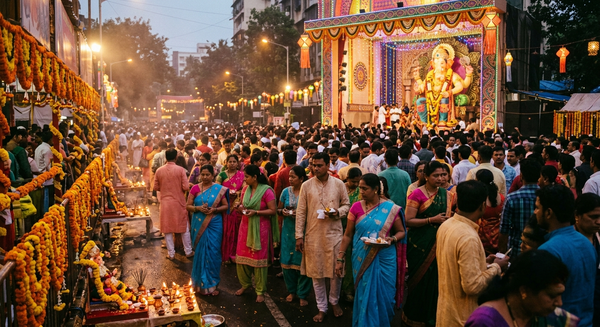
Mumbai did not become an international city recently. It has been a port, a trading hub, a film capital, and a financial centre for over a century. The cosmopolitan character of its streets, food culture, music, and campus environments is the product of generations of being a place where people from everywhere arrive, study, work, and build their lives.
Bollywood, produced entirely in Maharashtra, has reached audiences across Asia, Africa, the Middle East, and beyond for decades. Many international students who arrive in Mumbai find that the films, the music, and many of the cultural references are already part of their cultural experience. The city that made them is not unfamiliar.
The campus community in Pune and Mumbai is genuinely international. Students from dozens of countries share lecture halls, laboratories, hostels, and canteens. This is not a domestic student body that tolerates international students. It is a campus environment in which global diversity is a normal, unremarkable feature of daily life.
The culture gap that prospective students imagine from outside Maharashtra is consistently, reliably larger than the gap they experience once they are actually on campus.
Frequently Asked Questions
Where can I verify all of this myself?
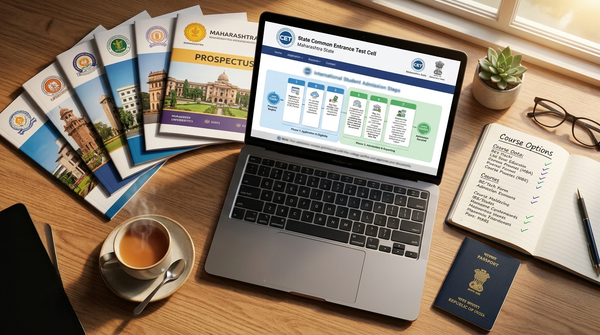
fn.mahacet.org is the starting point. The portal is operated by the State Common Entrance Test Cell of the Government of Maharashtra. It contains accreditation details, fee structures, hostel information, safety arrangements, and program details for every listed institution. All information is government-maintained and publicly available.
NMC recognition for medical colleges is independently verifiable at nmc.org.in. NAAC accreditation status for all other institutions is verifiable at naac.gov.in. These are primary government sources.
For any question the portal does not immediately answer, the fn.mahacet.org helpline at +91-9152252049 is available from 10:00 AM to 6:00 PM IST. Email support is available at student@mahacet.org. Both are listed on the portal and both respond.
The myths keep circulating because people share assumptions without checking sources. The facts are government-verified, publicly available, and waiting at fn.mahacet.org for any student willing to look.
Related Reading from Study in Maharashtra
- 6 Industries Where Maharashtra Graduates Dominate Globally
- Stop Paying Education Agents: The Only Website International Students Need
- The Complete Guide to Applying Through fn.mahacet.org as a Foreign National Student
Maharashtra is India's most connected state for international students. Over 3,000 colleges. Every discipline. One government-backed portal. No agents. No middlemen.
Apply now at fn.mahacet.org - the official Government of Maharashtra portal.
Follow us:
- Instagram: @admissiondeskedu
- YouTube: Edulab Educational Exchange
- Facebook: @admissiondeskedu