Maharashtra vs UK for MBBS: A Side-by-Side Guide for Bahraini Medical Students
Dina had two tabs open for six months. One was a UK medical school page showing a five-year MBBS and a tuition figure that made her mother go very quiet. The other was a Maharashtra government college listing. The MBBS Maharashtra vs UK comparison Bahrain students keep making is real, and it rarely gets answered with numbers. This article does exactly that.
Duration and Structure: How the Two Systems Compare
A standard MBBS in Maharashtra runs five and a half years, which includes one year of mandatory rotating internship. The degree follows the Medical Council of India curriculum, structured across pre-clinical, para-clinical, and clinical phases.
The UK runs a five-year undergraduate medicine programme at most institutions, moving into the Foundation Programme immediately after graduation. Some universities offer a six-year course that includes an intercalated Bachelor's year. On paper, the timelines are close. In practice, a Bahraini student finishing in Maharashtra is qualified and has completed clinical internship before a UK graduate enters their first Foundation Year.
Fees: What the UK Actually Costs vs Maharashtra Government Rates
This is where the comparison becomes very clear.
UK medical schools charge international students between £38,000 and £58,000 per year in tuition alone. A five-year degree at a mid-tier UK institution can cost a Bahraini family upward of £200,000 in tuition before living costs in London or Edinburgh are added.
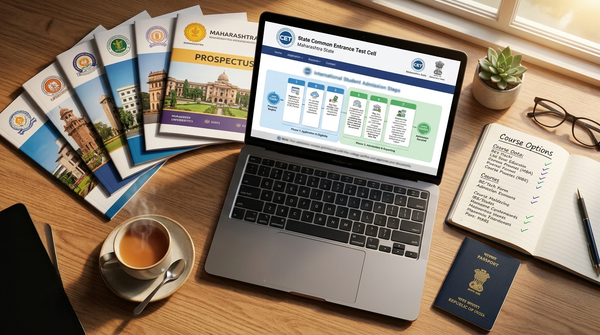
Maharashtra government medical colleges operate under regulated fee structures for international students. Annual tuition at government institutions is a fraction of UK costs. Management quota and private college fees vary, which is why verifying directly through the official channel matters. The Government of Maharashtra runs a single-window portal at fn.mahacet.org where international students can check verified fee information, college listings, and apply without going through any agent.
The portal processing fee for international applicants is USD 1,150, which covers the full admission process. That single figure is less than one week of tuition at a UK medical school.
Entry Requirements: IELTS, Grades, and How Competitive Each Route Is
UK medical schools typically require A-levels or equivalent with Biology and Chemistry at very high grades, plus a strong UCAT or BMAT score, a personal statement, and an interview. Most schools also require an IELTS score of at least 7.0 for international applicants. Acceptance rates at many UK medical schools for international students sit below five percent.
Maharashtra MBBS admissions for international students require Physics, Chemistry, and Biology at senior secondary level, with a minimum aggregate that varies by college. There is no standardised admissions test requirement for foreign national students applying through fn.mahacet.org. English medium schooling in Bahrain satisfies most language requirements, and no separate IELTS submission is mandated at the portal level.
The competitive landscape is meaningfully different. A student who has strong science grades but not a perfect UCAT score has a real pathway in Maharashtra that does not exist in the UK.
Clinical Exposure: Where the Real Difference Lies
This section matters more than any other for students who want to be good doctors, not just qualified ones.
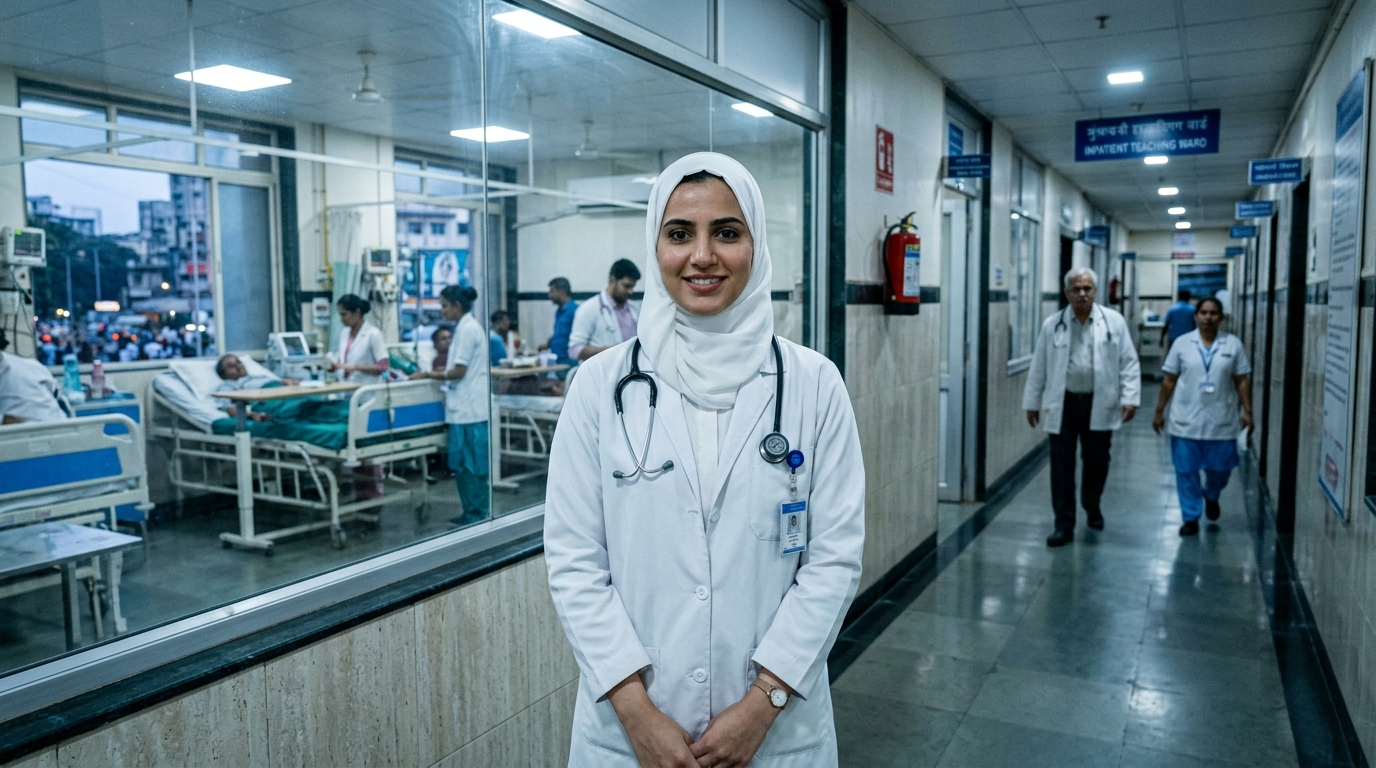
Maharashtra is home to some of India's highest-volume public teaching hospitals. Grant Medical College in Mumbai is attached to Sir J.J. Hospital, one of the largest public hospitals in Asia. Byramjee Jeejeebhoy Medical College operates alongside Sassoon General Hospital in Pune, another high-case-load facility. International students rotate through emergency wards, surgical theatres, outpatient departments, and rural health postings during their internship year.
In the UK, clinical placements are structured and well-supervised, but NHS capacity constraints mean students often observe more than they participate in their early clinical years. Maharashtra students typically see and assist with a significantly higher case volume by the time they graduate.
The honest trade-off: ward infrastructure and facilities in some Maharashtra government hospitals lag behind UK NHS standards. Students who need consistent, high-spec equipment should factor this in.
Recognition: NMC Approval and What It Means for Practice in Bahrain
Bahraini students have one critical question: will this degree let me practise at home?
The National Medical Commission of India recognises MBBS degrees from government medical colleges in Maharashtra. Graduates are eligible to sit the Foreign Medical Graduate Examination (FMGE) or its successor screening test to practise in India. For Bahrain, the National Health Regulatory Authority (NHRA) evaluates foreign medical degrees on a case-by-case basis. An NMC-recognised MBBS from a government college in Maharashtra is a qualifying credential for NHRA evaluation.
UK degrees from GMC-registered institutions carry straightforward international recognition. This is a genuine advantage, particularly for students considering postgraduate training or practice outside the Gulf.
The practical advice: verify your target college's NMC recognition status through fn.mahacet.org before accepting any offer. Not every private college in Maharashtra holds the same standing.
The Honest Verdict: Which Path Is Right for Which Student?
Choose Maharashtra MBBS if: Your family's total budget for a medical degree is under USD 80,000 to 100,000. You have strong sciences but not a perfect standardised test score. You want to graduate already having completed a clinical internship. You are comfortable navigating a large, sometimes chaotic, high-case-load hospital environment.
Choose UK if: Budget is not the primary constraint, and postgraduate training in the UK or a country that aligns with GMC recognition is the goal. You perform at the top of your national cohort in both grades and standardised testing. You prefer a smaller, more standardised clinical environment.
For the majority of Bahraini families weighing cost against outcome, Maharashtra government medical colleges represent a serious, fully accredited option with strong clinical training that the UK cannot match at the same price point.
FAQ
Can I transfer from a Maharashtra MBBS to practise in the UK later?
Yes, with additional steps. A Maharashtra MBBS graduate would need to pass the PLAB (Professional and Linguistic Assessments Board) examination to obtain GMC registration in the UK. PLAB is a two-part test covering clinical knowledge and practical skills. Many international graduates who trained in India have successfully cleared PLAB. It is not an automatic pathway, but it is a realistic one with preparation.
Does Maharashtra MBBS qualify for NHRA registration in Bahrain?
An NMC-recognised MBBS from a government medical college in Maharashtra is eligible for NHRA evaluation. The NHRA reviews credentials, conducts its own assessment process, and may require additional documentation. Students should confirm their college's NMC recognition status before enrolling and check current NHRA requirements directly.
Dina eventually chose Maharashtra. She is two years into her MBBS at a government college in Pune, and she messages her family videos from the surgical ward at least twice a week. The cost saving compared to the UK is funding her younger brother's engineering degree at the same time.
If you are a Bahraini student or the parent of one, the starting point is not an agent or a university fair. It is the official Government of Maharashtra portal, where every college, fee, and eligibility requirement is published in one place.
Apply directly at fn.mahacet.org. No agents. No middlemen.
Maharashtra is India's most connected state for international students. Over 3,000 colleges. Every discipline. One government-backed portal.
Apply now at fn.mahacet.org, the official Government of Maharashtra portal.
Follow us: Instagram: @admissiondeskedu YouTube: Edulab Educational Exchange Facebook: @admissiondeskedu