Surviving My First Pune Monsoon as an International Student
Surviving My First Pune Monsoon as an International Student
Nobody warned me that Pune gets 605mm of rain between June and September. Nobody told me July has 17 rainy days on average — or that a ₹300 pair of rubber chappals would become my most important purchase of the semester. This is the guide I wish I had.
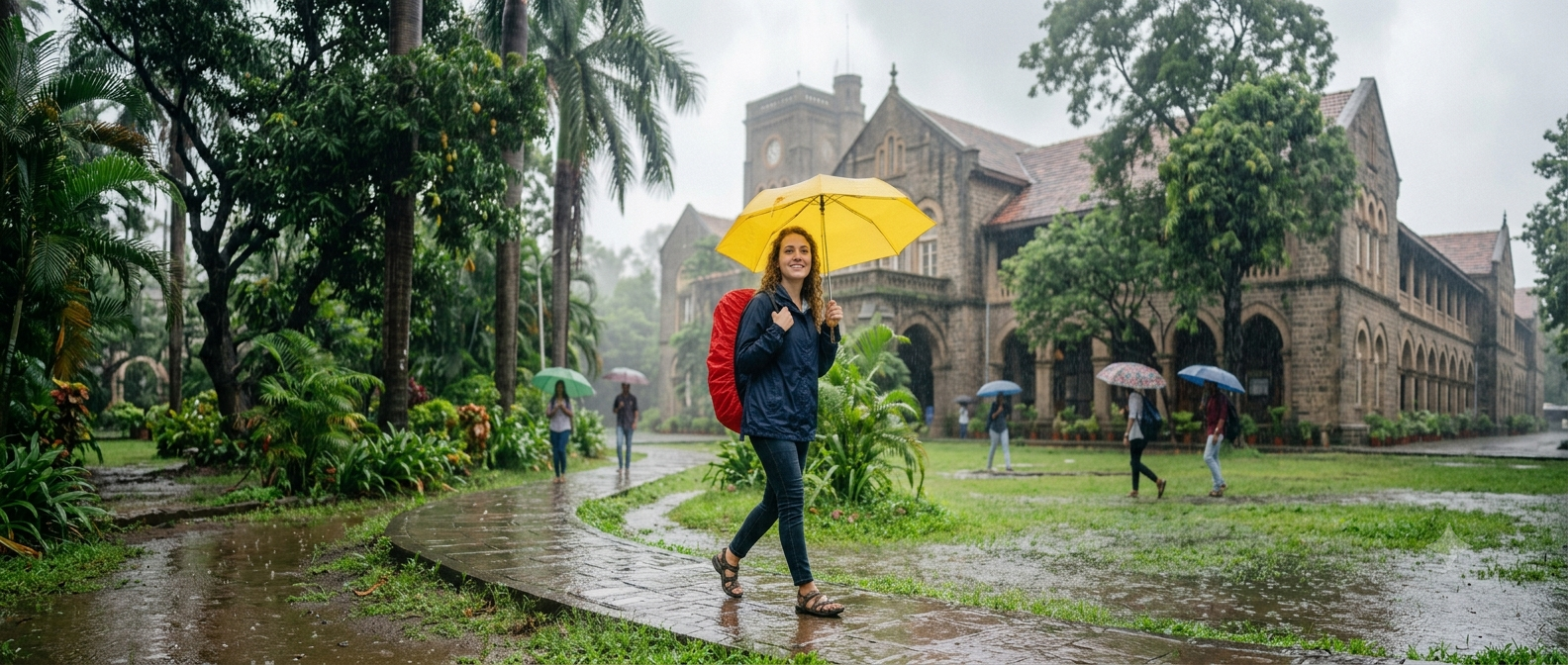
I arrived in Pune in the first week of June. The sky was grey before I had even collected my bags from the airport carousel. By the time my auto-rickshaw reached the hostel, the rain had started in that specific, indifferent Pune way — not dramatically, not like a storm, but as if it had always been raining and always would be. I was not prepared. This guide will make sure you are.
Pune's monsoon runs from mid-June to early October, with the bulk of its 605mm annual seasonal rainfall landing in July and August. Temperatures stay between 22°C and 27°C — cooler than the 40°C summer you may have read about, and genuinely comfortable once you stop fighting the rain and start dressing for it.
What the Pune Monsoon Actually Looks Like
Pune sits at 570 metres above sea level, tucked behind the Western Ghats. That altitude and geography mean Pune gets significantly less rain than coastal Mumbai — but what it does get arrives reliably, daily, and mostly without warning. Here is how each month of the monsoon plays out.
Pune Monsoon Month by Month — June to October
Verified climate averages. Source: India Meteorological Department (IMD) and published Pune climate data.
The Monsoon Survival Kit
Every item below costs less than one canteen meal at a Pune college. The total investment for a properly monsoon-ready bag is under ₹1,500 — roughly USD $18. None of it is optional by Week 2.
What to Buy in Your First Week in Pune
Available at any local market or Decathlon, Pune. Prices in INR. Total kit under ₹1,500 (~USD $18).
What Living Through the Monsoon Costs
Good news: the monsoon does not change Pune's affordability. According to studyinmaharashtra.org, monthly living costs in Pune run between $200 and $400, including hostel, food, and transport — and those figures hold through the wet season. If anything, the monsoon months are cheaper: you eat more canteen meals when going out means getting wet, and the city's outdoor markets charge less for vegetables in season.
What a Monsoon Month in Pune Actually Costs
Source: studyinmaharashtra.org. All figures USD per month for a student living in Pune.
* Costs do not include college tuition. Tuition for most courses ranges from $600 to $6,000/year and is paid directly to the college, separate from the government portal fee of USD $1,200. Source: studyinmaharashtra.org and fn.mahacet.org.
The Part Nobody Tells You: Monsoon Pune is Beautiful
Every preparation guide tells you what to pack. Nobody tells you that the Pune monsoon is, once you have the right chappals and a bag cover, one of the most unexpectedly wonderful experiences of student life.
The Sahyadri hills visible from most of Pune's older campuses turn a shade of green that does not exist in any other season. Lonavala and Khandala — two hill stations 60km west of Pune, reachable by train for ₹50 — transform into waterfall-lined landscapes that students from every corner of the world photograph and post home. The COEP campus alongside the Mutha River, the University of Pune's sprawling lawns, even the simple stretch of Fergusson College Road lined with gulmohar trees: all of them look different, and better, in the rain.
And then there is Ganesh Chaturthi. Arriving in September as the rains begin to ease, this ten-day festival reshapes Pune in a way that no guidebook fully captures. Every neighbourhood builds a temporary pandal housing a Ganesh idol — some modest, some the size of a building. Music plays until midnight. Every canteen offers modak. The city, usually focused and fast-moving, briefly becomes communal in a way that draws in even the most homesick international student.
Monsoon Questions, Honestly Answered
Rarely. Pune's colleges are designed around the monsoon calendar — the academic year is structured so that June through September is an active teaching term, not a holiday or exam period. Heavy rain occasionally delays lectures by 15 to 30 minutes, but cancellations are uncommon. The exception is extreme weather events, which the college administration handles through official notifications and WhatsApp groups every campus has.
Pune city occasionally experiences waterlogging in low-lying areas during peak July rainfall. Most established university campuses — COEP, Symbiosis, MIT-WPU, Savitribai Phule Pune University — are on higher ground and manage drainage well. Check the specific location of your hostel relative to local drainage when you arrive; PG rooms in older parts of the city occasionally face ground-floor flooding in heavy downpours.
No. Academic year registration for international students at Maharashtra colleges begins in July and August — arriving before the monsoon is not possible without missing the admission schedule. More importantly, the monsoon is not something to avoid. It is something to dress for. With the right gear and a first-week market run, it becomes part of the experience rather than an obstacle to it.
No. Monthly living costs in Pune remain stable at $200 to $400 throughout the year, per studyinmaharashtra.org. Hostel rent is fixed by term. Transport costs are similar. If anything, monsoon months are slightly cheaper because students eat more campus canteen meals and spend less on outdoor activities and shopping. The one-time monsoon kit of umbrella, chappals, and bag cover costs around USD $18 at any local market.
Maharashtra's international admission process for 2026-27 runs through fn.mahacet.org. The registration window is active, and seats remain across Engineering, MBA, MBBS, Pharmacy, Law, and other programmes. The process takes two to four weeks from registration to seat allotment. Start with the free eligibility check at fn.mahacet.org/category-check — it takes two minutes and costs nothing.
Your Pune Story Starts at fn.mahacet.org
700+ colleges. One official portal. Students from 68 countries — most of whom also survived their first monsoon, and wouldn't trade the memory of it for anything. The eligibility check is free and takes two minutes.
Check Your Eligibility at fn.mahacet.orgQuestions? student@mahacet.org · +91-9076000348 / +91-8879082178 · Mon–Fri, 10am–6pm IST