You Already Know This Place: What Layla Found in Mumbai Before She Even Arrived
Every Afghan student considering studying abroad carries a quiet concern: Will I belong there?
It is a valid question. Moving to a new country means adapting to a new culture, language, and environment. But what if the place you are going already carries traces of the one you left behind?
Hindi and Dari share deep linguistic roots in Persian. For centuries, language travelled across regions through trade, poetry, and scholarship. Today, that shared history still exists in everyday speech.
Words like chai, dost, kitab, dil, waqt, rang - these are not foreign. They are familiar.
The pronunciation may shift slightly. The script may look different. But the meaning, the emotion, remains the same.
And when you hear your language reflected back to you in a new place, it changes something fundamental. You do not feel like an outsider.
The Silk Road Never Really Ended
Long before modern borders existed, there was connection.
The Silk Road was not just about trade - it was a continuous exchange of culture, ideas, and identity. Afghanistan and the Indian subcontinent were deeply linked through this network.
Afghan traders brought goods into Indian markets. Indian scholars shared knowledge across Central Asia. Persian poetry moved freely between regions.
Even the Mughal legacy, which shaped much of India's cultural identity, carries Afghan and Central Asian roots.
This shared past is not distant history. It still lives in language, food, music, and everyday life. And Maharashtra sits at the center of this cultural continuity.
Bollywood Was Always Part of the Story
For many Afghan families, Bollywood is more than entertainment - it is familiarity.
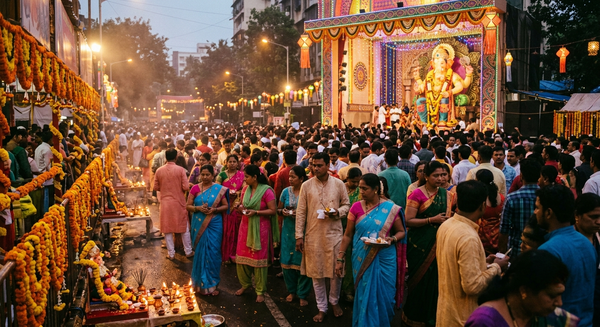
The songs, the emotions, the storytelling - these have been part of Afghan homes for generations. Weddings, celebrations, family gatherings - Bollywood is already there.
And all of it comes from one place: Mumbai.
When students arrive here, they are not stepping into something entirely new. They are stepping into a place they have already seen, heard, and felt.
The streets feel recognizable. The energy feels familiar. The warmth feels real.
Where Culture Meets Opportunity
Feeling at home matters, but education is the real goal.
Maharashtra is one of India's leading educational hubs, offering programs across Engineering, Medicine, Management, Architecture, Pharmacy, and Arts and Sciences.
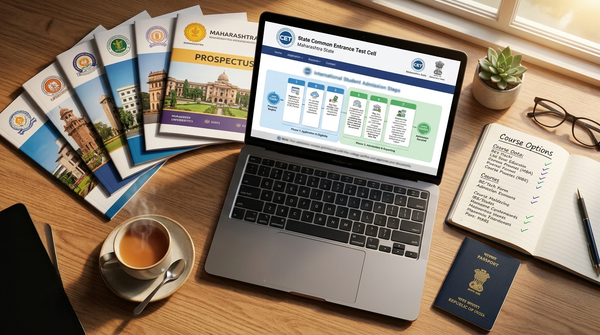
For international students, the process is centralized through fn.mahacet.org - the Government of Maharashtra's official admission portal.
It provides:
- Verified institutions
- Transparent fee structures
- Clear eligibility criteria
- Direct application access
No agents. No middlemen. No confusion.
Layla's Message
Today, Layla studies in Mumbai.
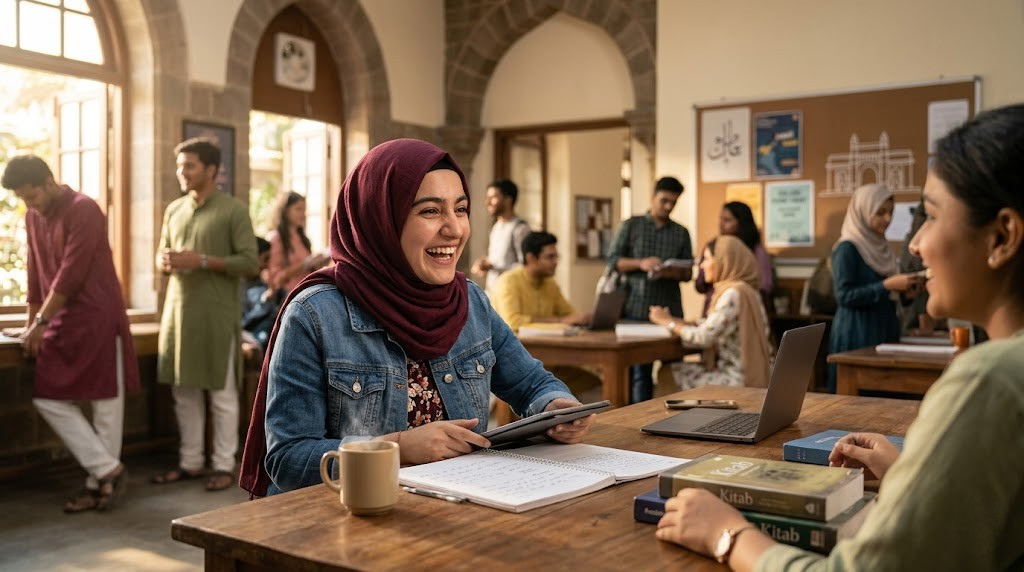
She navigates her classes in English, chats with friends using familiar words, and builds a future in a place that no longer feels foreign.
Her message to other Afghan students is simple: You already know this place.
The language will not feel entirely new. The food will feel close to home. The culture will resonate with you. The films you grew up watching were made here.
This is not a completely different world. It is an extension of your own.
Frequently Asked Questions
Can Afghan students apply without agents?
Yes. Applications can be completed directly through the official government portal: fn.mahacet.org. All information is transparent and verified.
Is Hindi required for studying?
No. Most professional programs are taught entirely in English. However, familiarity with Dari often makes daily communication easier.
Ready to Begin?
Maharashtra offers one of the most accessible and structured pathways for international students. Thousands of institutions. Multiple disciplines. One official platform.
Start your journey today: fn.mahacet.org
Follow us:
- Instagram: @admissiondeskedu
- YouTube: Edulab Educational Exchange
- Facebook: @admissiondeskedu