A/L Re-scrutiny 2025: Should You Apply or Move Forward?

Re-scrutiny opens April 6 and closes April 22. Here is the honest guide to making the right call for your future.
Results are out. The phones have quieted down. And now, somewhere between your parents asking "so what next" and you refreshing the same results page for the third time, you have heard about re-scrutiny.
Re-scrutiny for the 2025 GCE Advanced Level examination opens on April 6 and closes on April 22. The question every Sri Lankan student is asking right now is the same: should I apply, or should I just move forward?
Here is the honest answer. And then I will tell you exactly what to do either way.
What Is A/L Re-scrutiny and What Does It Actually Change?
Re-scrutiny is an official process where your A/L answer scripts are re-checked for marking errors. You can apply for specific subjects if you believe the marks awarded do not reflect your actual performance. The Department of Examinations typically processes these over several weeks and publishes revised results before university cutoff decisions are finalised.
Here is what re-scrutiny does not do: it does not re-mark your paper from scratch. Examiners check whether all questions were marked, whether totals were added correctly, and whether the marks were transferred accurately to the result sheet. It does not re-evaluate whether your answers were better than originally assessed.
The window is April 6 to April 22. Applications are submitted online via the Department of Examinations portal. There is a fee per subject.
Should You Apply for Re-scrutiny?
Apply if at least one of these is true for you. You were borderline for a Z-score cutoff and even one or two additional marks could change your university placement. You have a specific subject where your performance felt significantly stronger than the result suggests — not just "I thought I did better," but genuinely inconsistent with practice papers and teacher feedback. You can apply without it delaying any other decisions, because re-scrutiny results typically arrive after the standard university aptitude test application windows.
Do not apply just because you are upset about the results. That is completely understandable, but re-scrutiny is a logistical check, not a re-evaluation of your academic ability. Applying for five subjects because you are disappointed with all of them is unlikely to change your outcome and will cost you application fees and several weeks of waiting.
The most practical rule: apply for one subject maximum, only if a specific marking concern exists.
What Is Plan B and Why Does It Matter More Than You Think?
Here is something most Sri Lankan families do not hear clearly enough. A/L results and local university Z-scores are one pathway. They are not the only pathway.
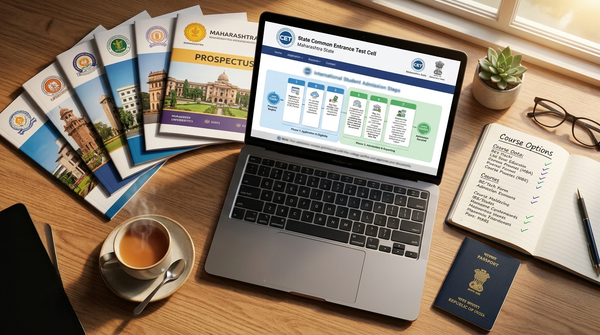
Maharashtra, India has a single-window foreign student admission system managed by the State CET Cell. Sri Lankan students applying as Foreign National Students can apply for courses including engineering, pharmacy, management, and more at government-aided and private institutions across the state. The application process is centralised through fn.mahacet.org, which means you do not have to approach individual colleges separately.
The cost comparison matters here. A four-year degree at a private university in Colombo can exceed 3,000,000 LKR in total. The same duration degree in Maharashtra, including tuition and living expenses in Pune or Nashik, often lands significantly lower in total cost when calculated in LKR at current exchange rates. That is not a sales pitch. That is arithmetic worth doing before assuming "abroad" means more expensive.
What Sri Lankan Students Should Know Before Deciding
The Sinhala and Tamil New Year falls on April 13 and 14. Most families will spend that week together, and this is genuinely one of the best times to have the honest conversation with parents about what the next step looks like.
If Maharashtra is a real option your family is considering, the application cycle is open now. One thing that catches students off guard is documentation. The process requires specific educational documents, and some take time to obtain, including AIU eligibility certificates for students who completed A/Ls abroad. Starting the documentation process early, even before fully committing, means you are not caught scrambling later. You can review the full document checklist at fn.mahacet.org.
One honest challenge: the adjustment period in Maharashtra is real. Hindi is the primary language in many daily settings, and while English is widely used on campus, life outside campus takes some getting used to. Most Sri Lankan students report that the first three months are the hardest, and then it becomes home. That is worth naming.
Frequently Asked Questions
Can I apply for both re-scrutiny and a Maharashtra university simultaneously?
Yes. Re-scrutiny and the fn.mahacet.org application process are independent of each other. Applying for one does not affect your eligibility for the other. You can pursue both timelines in parallel.
When will re-scrutiny results be released?
The Department of Examinations has not announced an exact date. Historically, re-scrutiny results are released several weeks after the application window closes. Applying by April 22 and expecting results before late May is a reasonable estimate, though not guaranteed.
The results are out, and the window for what comes next is open right now. Whether you apply for re-scrutiny, pursue Maharashtra admissions, or both, the most important thing is to move with intention rather than wait and see.
If you want to understand the Maharashtra application process properly, fn.mahacet.org is the official single-window portal for foreign students. Everything you need, from eligibility to documents to the college list, is there.
Make the decision that is right for you. Not the one that is easiest to explain to someone else.