Every Sri Lankan parent I have spoken to asks the same question first. Not about fees. Not about degrees. The first question is always: is it safe? It is the right question to ask. You are sending your child to a country they have never lived in, to a city they have only seen in videos, to live among people they do not yet know. Of course safety comes first. This article is for you — the parent — and it gives you an honest, specific answer.
Pune Is India's Largest Student City
Pune is not simply a city with universities in it. It is a city built around its students. With over 30 lakh residents and more than three lakh students enrolled across its colleges and universities at any given time, student life is woven into the fabric of the city.
This matters for safety. A city that depends on students — economically, socially, culturally — takes their wellbeing seriously. Landlords, restaurants, transport providers, local businesses: they all serve students. The city understands what students need, and it has built systems around that over decades.
Pune also has a notably international community. Students from Sri Lanka, Bangladesh, Nepal, the UAE, and across Southeast Asia study here. Your child will not be the only foreigner navigating a new country. There is a community already there.
What Safety Actually Looks Like on the Ground
Safety is not just about crime statistics. For a Sri Lankan student, it means: can I navigate this city without fear? Can I find food I recognise? Can I get help if something goes wrong? The answer to all of these is yes — with the right preparation.
Pune is a relatively safe city by Indian standards. It has a consistent police presence in student areas. Public transport is functional and well-used. Auto-rickshaws and app-based cabs are widely available and safe. The city is well-lit and active well into the evening in student neighbourhoods like Kothrud, Shivajinagar, Baner, and Aundh.
"Sri Lankan students generally report that the cultural adjustment is smaller than expected. India and Sri Lanka share food cultures, family values, a relationship with cricket, and a broadly similar social fabric."
The language barrier is real — Marathi and Hindi are spoken locally — but English is universally used in academic settings, and students navigate daily life faster than they expect.
COEP: What Good Support Looks Like
College of Engineering Pune — known as COEP — is one of Maharashtra's oldest and most respected technical institutions. Founded in 1854, it is an autonomous institute under Savitribai Phule Pune University with a long track record of producing engineers who go on to work across India and internationally.
For international students and their parents, COEP is notable for several reasons beyond its academic reputation. The campus is self-contained. Students have access to on-campus hostel facilities, which means your child does not need to navigate off-campus accommodation from day one. This is a significant safety and logistical advantage, especially in the first semester when everything is new.
COEP has established processes for international student onboarding — document verification, orientation, and connecting new students with senior students from similar backgrounds. Campus security is consistent, gated, and monitored. If your child is uncertain about anything, there is a support system in place.
The Role of the Official Portal
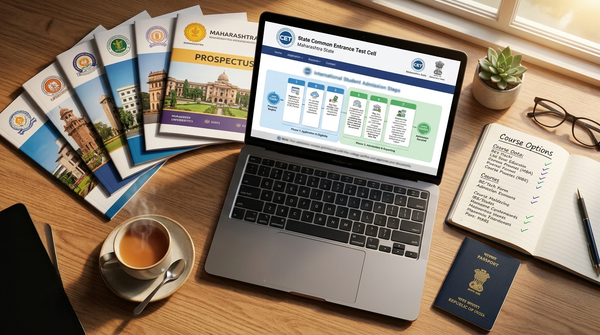
One of the strongest safety signals for Sri Lankan families is the existence of a single official government portal for admissions: fn.mahacet.org. This portal is managed by the State Common Entrance Test Cell, Maharashtra State, and it is the only verified pathway for foreign national and NRI students applying to Maharashtra colleges.
The existence of this portal matters for safety in a broader sense. It means your child is not going through an agent whose motives you cannot verify. It means the institution they are applying to has been approved and listed by the Maharashtra government. It means the process is transparent, documented, and official.
Many families in Sri Lanka have been burned by education agents pushing institutions that turn out to be low-quality or unrecognised. The single portal removes that risk at the source.
Practical Steps Before Departure
Before your child travels to Pune, these steps will make both of you feel more secure:
-
1Register with the FRRO within 14 days of arrival. This is mandatory for Sri Lankan students on a student visa and it is protective — it documents your child's legal status in India.
-
2Set up a local Indian SIM card on day one. This keeps communication open and allows access to local transport and food delivery apps immediately.
-
3Identify a Sri Lankan student contact in Pune before arrival. There are active Sri Lankan student communities in Pune. A brief conversation with one of them before departure is worth more than any article.
-
4Arrange comprehensive travel and health insurance. Valid in India. Not something to skip or postpone.
What Parents Who Have Done This Say
The families who have gone through this process — who have sent their children to Maharashtra, watched them struggle through the first month, and then watched them find their footing — consistently say the same thing. The fear was bigger than the reality.
Pune is a city that absorbs students. It is not hostile. It is not indifferent. It is busy, sometimes overwhelming, and occasionally confusing. But it is manageable, and it has seen enough international students to know how to help them land.
Your child will face challenges. The heat in May, the paperwork in July, the homesickness in October. But they will not face those challenges alone, and they will not face them in an unsafe environment. How quickly it starts to feel like home will surprise you both.
Official Admissions Portal